Everyone wants one thing. A future economy that is
decentralized, therefore no control. Instant and free. Few blockchains can
handle a major transaction load right now. No one should be surprised if more
projects move away from this unreliable blockchain. Rest assured there will be
quite a few interesting options to explore in this regard. One possible
solution, The IOTA project, promises a lot and presents the Tangle as this new
revolutionary cryptocurrency paradigm that will phase out blockchain
technology. #IOTA is the tech that can achieve just that. If you are in it for
quick gains. Please move along.
, and Dr. Serguei Popov.
· It has a fixed maximum supply of 2,779,530,283,277,761 IOTA.
IOTA’s unique data structure and consensus algorithm sets it apart from traditional blockchains while giving it very special and attractive properties. Whereas traditional blockchains consist of a globally consistent linked list of blocks, IOTA uses a DAG(an elaborate term for a network of nodes.) Each connection between two nodes is unidirectional and the connections are acyclic (i.e. you cannot start from one node, traverse the connections in the graph, and get back to the same node).
· In IOTA you trade a small amount of computing power for the privilege to transact on the network. No fees or third parties required for confirmation. The system is designed to allow users to create transactions simply by validating, meaning that all transactions are secure, immutable and, most notably, free. IOTA's ledger is a Directed Acyclic Graph(DAG), as opposed to a linear blockchain design, allowing the system to settle transactions with zero fees enabling devices to trade exact amounts of resources on-demand, as well as store data from sensors and dataloggers securely and verified on the ledger. The use of a DAG allows IOTA to have unlimited scaling and zero-fee transactions. Put together, the #DAG and IOTA’s consensus algorithm or the transaction is known as a Tangle.
· In traditional blockchains, the confirmation time of a transaction depends on the blockchain’s average block time and the fee a user is willing to pay. In the Tangle, a transaction’s confirmation time depends on the usage of the network. With low usage, a transaction will take longer to get validated since there are fewer new transactions that will validate it. With high usage, a transaction will get validated faster since there are more new transactions.
· Internet of Things(IoT) economy. The biggest emerging market for IoT is consumer grade. We got fridges and coffeemakers and thermostats, etc. that all have the necessary hardware to make the small computations needed for IOTA to work already and the lowest they have run it at is equal or less than a toaster in processing power/energy. Traditional blockchains are not really useful in the IoT world at all: fees, scalability and throughput, and the rigidity of infrastructure. Because public blockchains like Bitcoin are essentially used by two types of participants – users and validators – there will always be an issue of transaction fees. Validators are only running their systems to earn fees, and as blockchains become popular this leads to bottlenecks and higher fees. This is fatal for a situation that involves processing micro-transactions between machines. IoT devices can send iota transactions with 0 iota in them! So essentially transmitting for free besides having to do the quick proof of work for 2 previous transactions is what will make the Internet of things work seamlessly and cost-efficient – free!

IOTA has deployed to production its own version of the Lightning Network called Flash Channels. Flash Channels are a bi-directional off-Tangle payment channel to enable instantaneous, high-throughput transactions. If this is true, it is incredibly impressive as Bitcoin and Ethereum haven’t been able to deploy their own versions of off-chain payment channels Clearly these are barriers to their performance in microtransactions. Because IOTA theoretically has unlimited scalability with zero-fee transactions, it is perfectly suitable for the Internet of Things (IoT) applications. Devices can trade exact amounts of resources, as well as store data from sensors and dataloggers cheaply, quickly, and securely on the network. This is great for IoT devices that often need to broadcast and receive large amounts of data. Again, the more the devices, the better the security and speed of the interactions, regardless of the size of the transaction. This clearly poses a major threat for Blockchain technology, which are limited by fees, bottlenecks and Scale ability.
· The Data Marketplace was made possible only because of the Tangle’s unique properties of unlimited scaling and zero-fee transactions. This allows IoT devices to continuously inject a large amount of data into the network quickly and cheaply, which creates a highly efficient market where the only supply-side cost is the electricity needed to run IOTA’s node software and to perform proof of work every time a transaction is issued
Does IOTA have poor security?
IOTA is a relatively new cryptocurrency with very low network usage, the IOTA Foundation has to run what is known as a Coordinator that dictates the network’s progress. This effectively centralizes the network and significantly reduces its value proposition as a cryptocurrency. the number one concern in the crypto-community regarding IOTA is the coordinator. Many are sceptical that the tangle will be able to grow big enough to turn the coordinator off. The more Full Nodes are running, the stronger the network becomes, the faster the coordinator will be turned off. However, right now, running your own full node is very unhandy. Besides of starting it on command line, you have to manually manage the neighbour nodes you want to connect to. It is a huge barrier for the network growth. IOTA needs to be heavily used in order to be secure. If IOTA is able to significantly bump up network usage and shed off its reliance on the Coordinator, it’ll become a truly decentralized network with trust less security. In its current state, it’s centralized without trust less security.
· Quantum computing theoretically not break IOTA’s public-key algorithm. In order to be quantum proof, IOTA uses something called the Winternitz OTS which reveals half of an address’s private key every time a transaction is sent from that address. Therefore, it is not advised to send IOTA from the same address multiple times. This is known as the “address reuse” mistake.
· Given that IOTA’s public addresses are meant to only be used once, the number of unsafe public addresses will grow at an exceedingly fast pace. Luckily, the space of all possible addresses is insanely large so there’s no need to worry about the number of safe addresses running out any time soon.
Manufacturing Industry shows Interest in IOTA
·
SatoshiPay began exploring the replacement of
Bitcoin with IOTA as the company’s settlement network in July 2017. This comes
after Bitcoin’s fees and confirmation times have increased significantly due to
an increase in adoption of the network. Bitcoin continues to experience
significant congestion today. SatoshiPay’s efforts to integrate IOTA has
stalled recently in favour of the Stellar network. The IOTA + SatoshiPay
integration is stuck at phase 2 of 3 phases and it is unclear whether
SatoshiPay will choose Stellar over IOTA.
·
In August 2017, the IOTA Foundation forged a
partnership with REFUNITE, the world’s largest missing persons database, in
order to use IOTA technology to help reunite families during and after
conflicts.
·
In August 2017, Monster Cleaning Services, a
London UK based company, announced that they are accepting IOTA as a payment.
·
In August 2017, Sopra Steria, a European
information technology consultancy company with 40,000 employees, announced a
partnership with IOTA to create a framework to optimize security between
devices on the Internet of Things.
·
In November 2017, LATTICE80, a Singapore based
Fintech hub and largest of its kind, cemented an agreement to open an IOTA
innovation lab for the Internet of Things.
·
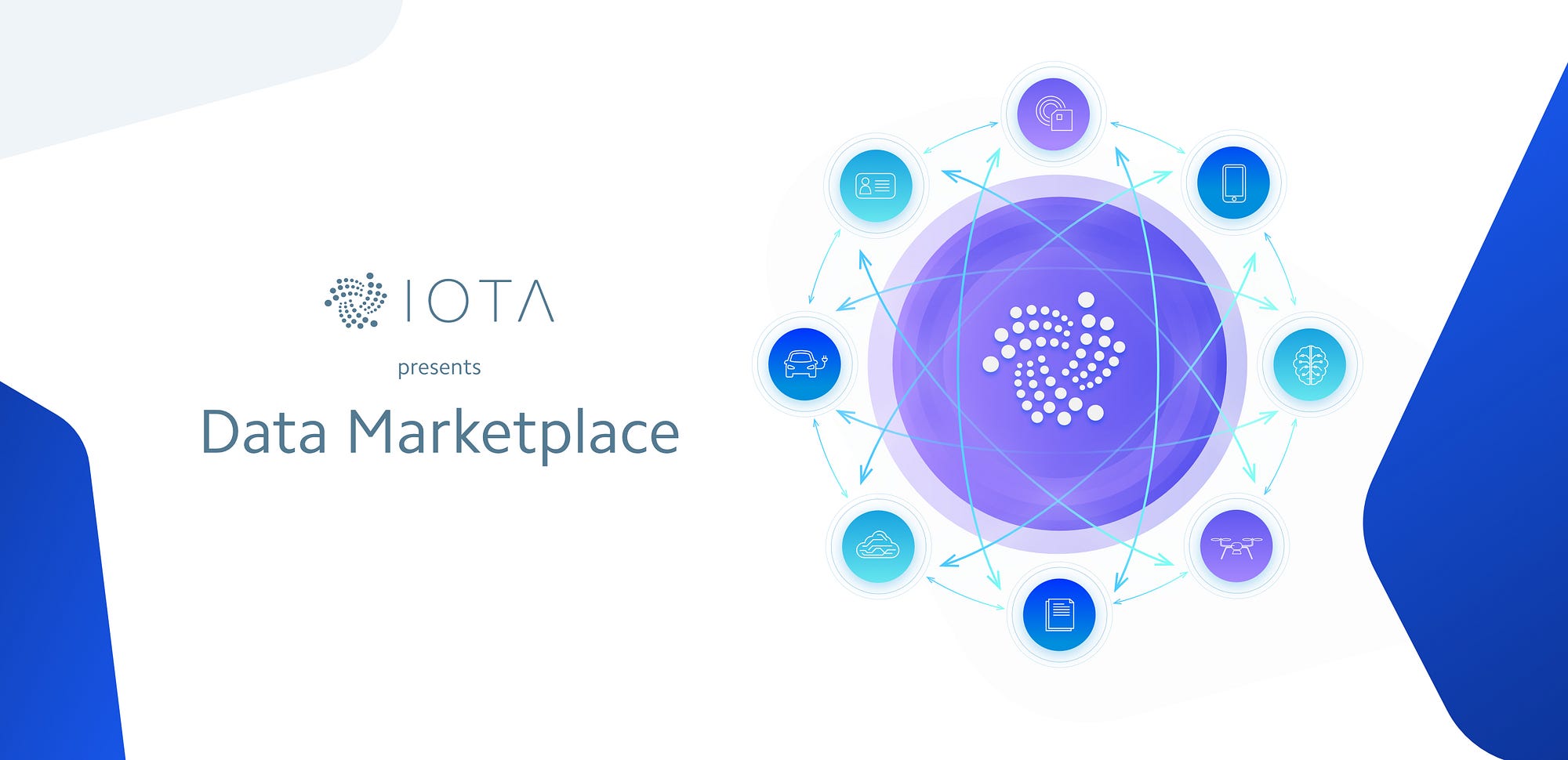
In November 2017, IOTA announced its Data
Marketplace. It’s an ambitious project that aims to create a market where
individuals and companies can buy and sell data. Suppliers can setup sensors
connected to the Tangle that will feed data to the market. Buyers can then
ingest this data from the market for a small fee paid to the seller. The
project is currently undergoing a 2-month-long pilot phase with several
corporations and institutions participating including: Accenture, Fujitsu,
Bosch, Farmforce, and the University of Oslo.
·
When IOTA released its launch marketing for the
Data Marketplace project, there was a widely disseminated article by a
third-party publisher that claimed that Microsoft was “partnering” with the
IOTA Foundation in building this project. However, this turned out to be
objectively false and IOTA was simply using Microsoft’s Azure platform to host
the Data Marketplace. Not once did they lie about partnerships. A statement put
out by A Microsoft employee was misconstrued by media. This supposed
“partnership” was never communicated by anyone at IOTA nor our PR agency to any
of the journalists. In essence, IOTA was a customer of Microsoft instead of a
partner.
·
Cisco and Samsung Group which were mentioned are
also not associated with the data marketplace at all. Only “Samsung Artik”
(Samsung’s IoT Platform) is publicly participating.
IOTA has a lot of potential, but also a lot of challenges ahead!
·
IOTA’s codebase uses a balanced ternary numeral
system. So instead of having only 0’s and 1’s like binary, balanced ternary has
-1’s, 0’s, and 1’s. IOTA’s developers defend this decision by stating that
ternary processors are theoretically more efficient than binary processors and
that certain mathematical constructs are more cleanly represented in balanced
ternary.
·
Beyond the general state, one of the biggest
hinderances to adoption is public policy. Despite the fact there are bazillions
of IOT devices, IOT manufacturers usually lag far behind in terms of
technology. The team has been actively working on an open API to enable the
community to participate (hopefully before the end of this year.)
·
Meanwhile, with no mining reward, unless you're
an IoT dev or IOTA vendor there's just no incentive to run a full node altogether.
On this point IOTA isn't really "free" since you will have to pay the
expense of running a node. Some incentives users would have to run a full node
include:
·
Running the full-node is beneficial for the
tangle topology and you want to help.
·
You have lots of transactions to make and don’t
want to rely on a light node-server that is not always running, as there is no
guarantee that they are online when you need them.
·
You have a web app running and need the stable
connection in any event.
·
You want to have maximum speed, so you choose
the full-node, to process the transactions faster. The future, maybe you provide a service and earn money for a full node. That is purely speculative.
·
You want to have a copy of the Tangle database,
that is generated when using a full-node. (good for several reasons)
· The new wallet might fix more issues and we'll have a fully functional Tangle like intended.
·
The IOTA Foundation presides over IOTA. It’s a
German non-profit corporation that coordinates and funds the development of
IOTA. As of November 2017, the Foundation has a fund consisting of 5% of the
total IOTA supply that’s worth $100 million as of November 2017. The fund is
used to promote the development of a technological ecosystem around IOTA.
Conclusion
IOTA is an ambitious and
technically impressive project. It’s promise of unlimited scaling and zero-fee
transactions is particularly enticing, especially for Bitcoin users that are
currently seeing transaction confirmation times and fees sky rocket. However,
it is not without its shortcomings. The network is definitely not secure in its
current level of adoption and needs to be centralized to keep it afloat. The
Data Marketplace project is a great initiative that not only brings tremendous
utility to the network but also decentralizes it. However, it is important to
keep in mind that if the project fails, IOTA will remain centralized for the
foreseeable future. I also have some reservations on the maturity and
leadership skills of the project’s co-founders. Besides these issues, I think
IOTA is a very strong and exciting project.
 |
| IOTA/USD |
Bitcoin may have stabilised to a certain extent, but other currencies such as Ethereum, ZCash, Ripple and Litecoin have soared as critical mass has been established. Crypto conversations in coffeeshops are now commonplace. Nobody knows what will happen in 2018.

 It’s no secret that many ICOs launch without an MVP in place, or that many have simply hired a developer to create the smart contract for their token. Recruiting developers and writing code costs money after all, and money’s hard to come without an ICO, hence the eagerness to crowdfund first and code later. New research by ICO Rating shows the prevalence of this trend among crypto projects. Their market research report reveals that 46% of the ICOs that launched in Q1 of 2018 did so with zero development.
Just 26% had an MVP in place, and 15.5% had an alpha release ready at the time of their ICO. It’s become commonplace for projects, especially those working on blockchain infrastructure, to launch with just a roadmap and whitepaper as an ERC20 token before initiating a token swap once their mainnet is ready several months down the line. The difficulty for investors, trying to scrutinize these projects, is that they must trust the claims of throughput and other performance-based metrics, since there is no way of verifying them.